

Event Page Banner 39

Real Rates Reform

A fairer deal for a modern economy 

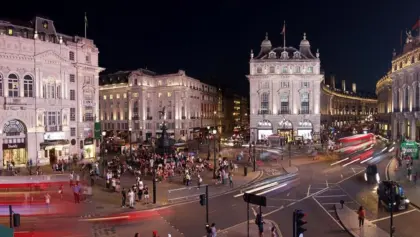
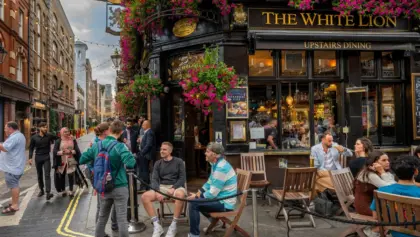
Bricks-and-mortar businesses – on high streets across the country, including London’s West End - carry an unfair share of the business-rates burden, holding back the UK economy. The 2025 Autumn Budget confirmed that from 1 April 2026, further significant rate increases will fall on England’s physical businesses, with retail, hospitality and leisure facing the greatest pressure. 

HOLBA’s solution, a Hybrid Business Rate, rebalances an outdated system to match the changes in our modern economy. By ensuring digital operators contribute fairly, we ease the burden on businesses occupying physical sites, protecting jobs, strengthening high streets and driving national growth. 

An unequal business rate system holding back growth 

Bricks-and-mortar businesses continue to shoulder a disproportionate share of taxation, despite the Government's promise of permanently lower rates for the retail, hospitality, and leisure sector. 

Today, retail, leisure and hospitality businesses make up just 9% of the economy, yet contribute 34% of all business rates. Meanwhile, the fast-growing digital economy, around 20% of UK GDP, does not contribute its fair share to local Government services. 

HOLBA RRR PIE

Threats to high streets and the national economy 

Increases in business rates penalises businesses occupying physical premises.  

The experience economy (pubs, hotels, restaurants, theatres, cafés, retailers and galleries) faces the greatest pressure. Rateable value increases are driving substantial business cost rises, which threaten the UK economy. 

Without reform, investment, jobs, and cultural vibrancy are at risk. 

HOLBA RRR BAR CHART

Rising costs for businesses with physical premises push up consumer bills and inflation, suppressing spending both online and on high streets, with knock-on effects for local communities and the wider economy.

Online spending and local experiences are interdependent. For example, in the West End, 99% of theatre tickets are purchased online, yet every £1 spent generates £1.40 in the local economy, supporting shops, restaurants, and other businesses.

The West End alone contributes £55bn a year to the UK economy, but some businesses face rate rises of over 100% from April 2026. 

Without Real Rates Reform, our high streets, local jobs, and national growth are under threat.

HOLBA RRR FLOW CHART

The impact

CASE STUDY: Central London Hotel Chain

This British hotel chain in central London, offers smart, space-efficient rooms at a more accessible price point than most competitors.

The latest Budget delivers a significant blow to the hotel chain and wider hospitality sector. From April 2026, the chain’s business rates bill will rise by an estimated 100% across its 12 London hotels — a £4 million increase spread over four years. This means almost 10% of all revenues will go directly to business rates, a stark jump from the typical 2% benchmark. These escalating costs are entirely out of step with revenue growth over the past six years.

To cope, the chain is reviewing staffing levels across its hotels and leaving vacancies unfilled — decisions that risk service standards and jobs in a sector already under intense pressure.

CASE STUDY: A Large Visitor Attraction in London’s West End

In the heart of the West End, this world-class attraction delivers unforgettable experiences for families and corporate groups alike, attracting 100,000s people per year to the area. 

Under the new higher rate multiplier due to come into effect in April, as well as the removal of the rates relief scheme, the business will see its annual rates bill increase by over a third, pushing its total tax burden past £2 million.

As a result, the business has already began to review further UK investment in the short term and focus on international markets for growth and expansion. For the wider economy, that means fewer jobs, less innovation, and a weaker experience economy — putting the ambitions of the London Growth Plan at risk.

To keep London’s cultural attractions thriving, tax policy must strike a balance: raising revenue without stifling the very industries that make the city a global leader.

CASE STUDY: West End Theatre

This West End theatre hosts a resident production and delivers over 400 performances each year. The venue employs a mix of permanent staff, front-of-house teams, and technical crews, and, like many of the UK’s historic theatres, requires constant investment in maintenance, safety, building improvement, and accessibility.

Under the Government's business rate proposals, from next April, the theatre faces a projected 26% rise in its business rates bill: increasing from £275,000 to £344,000.

With operating costs for utilities, staffing, and insurance rising at twice the rate of revenue, there is little capacity to absorb additional fixed costs. Ticket prices cannot simply be increased without undermining audience accessibility and demand.

The additional business rate burden will inevitably divert essential funds from maintenance and modernisation, reducing flexibility for wider investment priorities, including accessibility enhancements and environmental upgrades that support the theatre’s long-term sustainability.

As costs rise and margins tighten, the risk grows that heritage venues will become less attractive to producers and audiences alike, threatening a cornerstone of the UK’s cultural economy and visitor appeal. For every £1 spent on a theatre ticket, an additional £1.40 is spent locally in restaurants, bars, shops, and transport.

Increased business rates therefore risk weakening the wider ecosystem that depends on the West End’s success.

Why the system fails a modern economy 

Business rates were introduced in 1990, when digital operators barely existed. Despite reliefs, revaluations, and promises to permanently lower rates for retail, hospitality, and leisure (Autumn 2025 Budget), the system remains outdated and unfair. Government aims to “capture the online giants,” yet current reforms continue to place heavier burdens on the physical businesses that power high streets and local economies, undermining stated policy objectives. 

HOLBA’s Hybrid Business Rate: A fairer, modern system 

HOLBA’s Hybrid Business Rate solution evolves the current system to match the changes in the economy in the 35 years since business rates were introduced in 1990. 

Our Hybrid Business Rate Solution allows property-light digital businesses, now around 20% of the UK economy, to pay their fair share to the cost of funding vital local government services. 

  • 37% cut to business rates, restoring the business-rate multiplier to its 1990 level (34.8p) to ease costs for bricks-and-mortar businesses and high streets.
  • 2% levy for online businesses ensures digital operators contribute fairly, with exemptions for products and services that drive consumers to the high street.
  • Despite lower rates, the model raises an estimated £1.6bn more for the Government than the current system.

This meets the Government’s key objectives of supporting the high street, levelling the playing field between online and high street activities and creating a modern, sustainable and transparent system.  


Hybrid solution

Real Rates Reform: We want to hear from you
 

Sign up to follow our campaign calling for a fair business rates for the modern economy. 

Or contact our Head of Public Affairs, Antonia Stratford, at antonia@holba.london, for further information. 


Our research and resources

  • Consultation response to the Government's proposed changes to business rates on West End businesses.
  • Impact assessment of the upcoming changes and their real economic impact.
  • Our Hybrid Business Rate solution which provides an alternative to the way business rates are calculated to provide a fairer system and greater revenue.
  • Our business rates specialists met to unpack what it means for your business and to explain how we are taking action on behalf of our members. If you missed it live, you can now watch the full webinar.

In partnership with Colliers, we’ve created a dedicated business rates calculator, designed exclusively for our members.

Why use it:

Business rates calculator:

Simply input your organisation and postcode to understand exactly how the new multipliers will impact business rates liability for your property.
No guesswork for your 2026 budgets; just accurate, Colliers-powered insights.
HOLBA and Colliers’ London specialists are here to help you stay ahead of pending legislative change.

News announcements

View allNews
Website Banner Template Size 3 Blogs General Page and Event Pages 2

UK’s major business bodies to unite over business-rates system concern

1 December 2025
Read more about UK’s major business bodies to unite over business-rates system concern
Website Banner Template Size 3 Blogs General Page and Event Pages

Autumn Budget 2025: What Central London Businesses Need to Know

26 November 2025
Read more about Autumn Budget 2025: What Central London Businesses Need to Know
I Stock 2216808881

Political Update

7 October 2025
Read more about Political Update
Previous
Next