
A better public realm
Co-ordinated investment in safe, attractive, inclusive and high-quality streets and spaces that support dwell time, spending and experience.

Recognising the West End as a single international centre
The West End is one of the world’s most powerful urban economies where culture, hospitality, retail, entertainment and the night-time economy come together at scale.
But while it operates as a single connected destination, it isn’t treated as such. There is no single boundary, no shared plan, and decisions are split across multiple organisations.
That’s holding it back.
That’s why we are calling for the whole of the West End to be formally recognised by the Greater London Authority and Westminster City Council and designated as an International Centre.
A shared approach that brings together strategy, investment and decision-making so the West End can succeed as a single, world-class destination.
The West End thrives on a mix of culture and commerce. Businesses and investors face unnecessary barriers that make it harder to invest and innovate. And visitors and residents face congestion and accessibility challenges.
Theatre operations depend on short windows for maintenance, production changes, and improvement works. When planning, licensing, and transport are not closely aligned, it can be harder to deliver projects efficiently or support audiences travelling home after performances.
WEIC would bring planning, licensing, and late-night transport into a more coordinated framework. It would support faster decisions, better alignment with theatre schedules, and targeted measures to improve access for schools, families, and wider audiences.
The result would be a more agile theatre sector, better audience experience, and stronger local spending before and after shows.
The West End continues to attract demand for high-quality office space, while employers also want the district to feel safe, clean, and attractive for their employers. Delivering new office space and supporting the daily office environment works best when planning, place management, and public realm improvements are aligned.
WEIC would help provide clearer planning processes, better coordination between offices and nearby uses, and consistent investment in streets, safety, and servicing. It would also support a stronger link between office activity and the wider daytime economy.
That would help workers feel more confident in the area, while supporting cafés, shops, and culture throughout the week.
The West End’s retail offer depends on a strong visitor experience, with easy wayfinding, attractive streets, and places that encourage people to stay longer. Retail continues to evolve, with more demand for immersive, mixed-use, and experience-led formats.
WEIC would support investment in public realm, faster decisions for well-designed retail concepts, and a more joined-up approach to managing the district. It would help create the conditions for flagship stores, hybrid retail and hospitality spaces, and other formats that bring people into the area.
The result would be a more compelling shopping experience, greater dwell time, and stronger footfall for retailers and nearby businesses.
Hotels benefit when the surrounding area feels welcoming, well-managed, and easy to navigate at all times of day. Guests are more likely to explore, dine, and spend locally when there is good lighting, clear wayfinding, and a wider range of late-night amenities.
WEIC would support a coordinated approach to place management, public realm improvements, and licensing. That would help the West End function more smoothly as a global visitor destination.
For hotels, this would mean a better guest experience, longer stays in the area, and more trade for local restaurants, bars, and attractions.
Well-run bars, clubs, and late-night venues depend on clear rules, timely decisions, and practical support around crowd movement and transport. When planning, licensing, and night-time operations are better aligned, venues can operate with more certainty and visitors can move through the area more safely.
WEIC would create a more joined-up framework for planning and licensing, with proportionate approaches that reflect venue type and location. It would also support safer egress, better transport coordination, and more visible place management at busy times.
That would help good operators invest with confidence, improve the night-time experience for visitors, and support the wider evening economy.
Residents living in the West End experience the intensity of a busy mixed-use district every day and night. The most effective approach is one that balances activity with liveability through cleaner streets, better-managed servicing, safer and more accessible routes, and clear accountability.
WEIC would bring together local partners - including Westminster City Council, Camden Council, Greater London Authority, TfL, Metropolitan Police - in a more coordinated way, with resident voices built into governance. It would support smarter freight and servicing arrangements, better evening management, ensuring that activity is encouraged and managed on the streets and in venues where it makes sense.
The benefit would be quieter nights, safer streets, and a clearer role for residents in shaping how the West End works.
The West End is facing global competition. Leading world cities are increasingly adopting dedicated frameworks for their most important economic and cultural districts.
From New York to Paris to Sydney, major international centres are being managed as distinct, high-priority ecosystems, with priority economic zones, clear governance and dedicated investment.
Other entertainment districts aren’t waiting for permission to act. The West End shouldn’t either. The West End faces complexity where clarity is needed, and fragmentation where coordination would unlock improvements.

Co-ordinated investment in safe, attractive, inclusive and high-quality streets and spaces that support dwell time, spending and experience.

Improved coordination across transport, servicing and night-time activity to support a thriving, accessible and safe evening economy.

Streamlined and modernised planning and licensing approaches that reflect the West End’s unique economic profile, enabling new experiences.

More aligned safety operations, congestion control and waste management across agencies, boroughs and partners.

A framework that better matches the West End’s economic importance to the UK economy with appropriate, sustained investment.

Aligning campaigns, events and partner activity to strengthen the area’s profile and reach visitors more effectively.
By firstly embedding a new West End International Centre in the London Plan, the Mayor of London's long-term blueprint for how Greater London will grow, the area can then establish a single, unified geography and economic growth plan.
It would align boroughs, BIDs, statutory agencies and partners around one shared framework, supported by a dedicated interdisciplinary coordination function.
To find out more, please contact our Placemaking Projects Manager:
June 2025: The Government recognises the Creative Industries as a key growth sector in its Industrial Strategy
May 2025: The draft of the new London Plan presents an opportunity for a relook at London’s spatial strategy
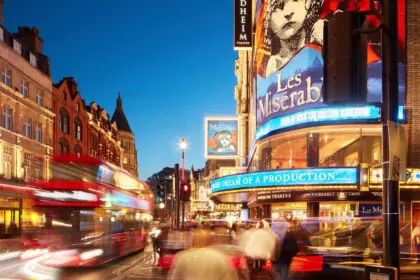
May 2025: New Nightlife Taskforce announced by the GLA, and After Dark Strategy consultation launched by Westminster City Council

April 2025: Government and GLA announce trialling new powers for Mayoral licensing control
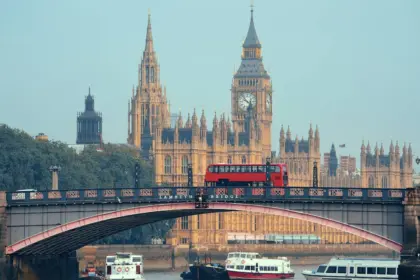
February 2025: Mayor of London recognises the Experience Economy as a key sector in his Growth Plan
The West End is a global player in a global competition. Other entertainment districts aren’t waiting for permission to act. The West End shouldn’t either
Ros Morgan, Chief Executive, HOLBA